
Family Sharing
Shared grocery lists: fewer texts, fewer duplicate gallons of milk
Households leak money in boring ways. Someone buys milk on the way home. Someone else buys milk an hour later because the first purchase has not shown up in the shared mental model yet. Nobody wants to run a standup meeting about dairy, but the receipts add up across a month, especially when you include snack duplicates and the extra jar of spice nobody needed.
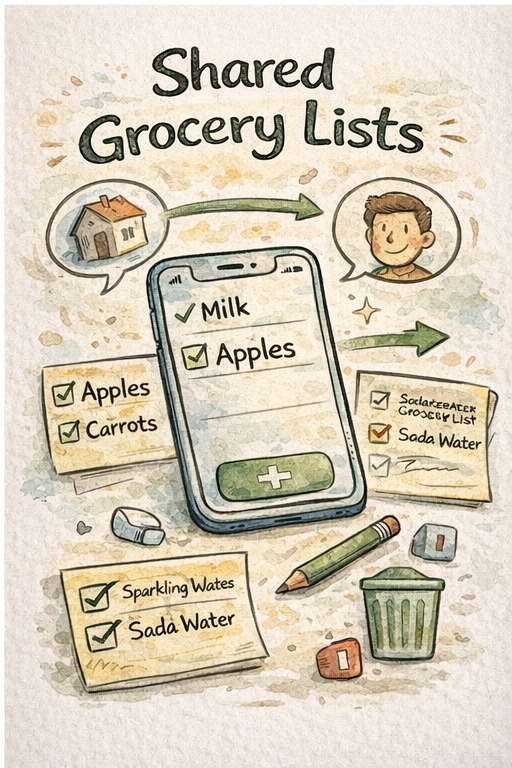
A shared grocery list is not magic. It is a single place where changes land without turning into twelve text bubbles. When the list is the source of truth, you spend less time coordinating and less money fixing mistakes. This article walks through how that works in practice, where people still mess it up, and how to pair shared lists with budgets and diet needs without turning dinner into a committee hearing.
For a product-level overview aimed at people who skim, the shared grocery list app page stays short on purpose. This post is the longer, messier version.
The real cost of duplicate buys
Duplicate purchases are not always obvious at checkout. They show up as extra yogurt nobody finishes, a second bag of rice in a small pantry, or snack overlap when everyone is stressed. The cost is cumulative. It is also emotional. People get irritated at wasted food, and irritation becomes a story about who is not paying attention.
Shared lists attack the information problem. If everyone sees the same lines update, you remove a whole class of mistakes that come from laggy communication. You still need norms, but you do not need psychic powers.
Roles without a corporate playbook
You do not need formal roles. You do need clarity. Some households split by section: one person handles produce and deli, another handles pantry and household. Some split by trip: weekday small runs versus weekend big shops. Some split by time: whoever is free grabs the list and goes.
Write your split somewhere dull. The refrigerator note beats an argument in the chip aisle. Revisit it when schedules change. Kids' sports seasons and new jobs upend shopping patterns faster than people admit.
Real-time updates and human attention
Real-time sync is useless if nobody looks at the list. Agree on a quick check before you enter the store. Thirty seconds of attention saves thirty minutes of backtracking. If you shop as a couple, decide whether you split inside the store or walk together. Both work. Mixed expectations do not.
Notes that prevent silent errors
Brand, size, and dietary constraints belong in notes when they matter. "Cheese" is not enough for a household that buys both snack cheese and cooking cheese. Short notes reduce follow-up texts. Follow-up texts are where tone goes sideways.
If someone in the house needs gluten-free products, call that out on the specific lines that need it rather than relying on memory. The gluten-free grocery list page can help newer shoppers learn safe vocabulary.
Money framing without turning the list into a spreadsheet
You do not have to put prices on every line to save money. You do need alignment on what "on sale" means for your household. If one person chases deals and another buys the same staples every week, you will duplicate or overbuy unless you coordinate.
For tighter budgets, the budget grocery list page is a practical anchor. Pair it with a shared list so everyone sees the same priorities.
Fewer interruptions, not zero communication
Shared lists reduce pings. They do not remove conversation. You will still talk about meals and cravings. The list handles the inventory-like parts so your chat can be about food instead of logistics.
If your chat is still noisy, your norms are not written down clearly enough. That is fixable without blame.
Offline and shared lists
Sometimes one person has bad signal in-store while another edits from home Wi-Fi. Offline-friendly behavior keeps the shopper moving while sync reconciles later. If something looks odd after connectivity returns, pause before duplicating lines. Anxiety edits propagate mess.
The offline grocery app for families page explains the family angle in a compact format.
Large households and volume
Big families scale coordination costs faster than they scale fridge space. Shared lists help, but you also need sections or sublists for bulk runs versus daily top-ups. The grocery list for large family page addresses volume without pretending one layout fits everyone.
Couples without kids
Two-person households have fewer hands and sometimes more assumptions. Agree on whether snacks are communal or personal. Ambiguity creates duplicates and quiet resentment. The grocery list for two people page is a simple entry point if you want external wording for that dynamic.
Students and roommates
Roommates benefit from explicit shared staples versus personal items. If you split costs, notes help. If you do not split costs, labels help even more. The college student grocery list page fits tight budgets.
Meal planning links
Shared lists work better when meals are roughly planned. You do not need a gourmet calendar. You need a sense of how many dinners require fresh produce versus frozen backup. The weekly grocery list planner page is a useful bookmark for weekly rhythm.
When shared lists fail
They fail when nobody owns cleanup. Old items linger. Checked items confuse people. Categories drift. If your list feels gross, spend ten minutes merging duplicates and archiving dead lines. Fresh lists get followed. Stale lists get ignored.
Privacy basics
Do not screenshot your household list for public posts without thinking. Groceries leak information about diets, kids, and schedules. Blur if you share tips online.
New roommates and onboarding friction
The first week with a shared list is awkward. Someone adds weird abbreviations. Someone else deletes lines they thought were duplicates but were not. Expect a little mess. Keep a thread or note for naming conventions: what "TP" means, whether "fruit" is open-ended or a standing order for apples. Tiny agreements prevent big annoyances.
Elder care and adult children
When you help parents shop, shared lists reduce errors without infantilizing anyone. The list can carry specifics while conversations stay human. If someone prefers a paper printout, generate a stable view from the same source so you are not maintaining two worlds.
Pet food and heavy bags
Heavy repeat items benefit from explicit assignment. If one person always carries cat litter and another grabs produce, say so. Shoulder injuries are not worth silent stoicism. The list note field is a fine place for "you carry this."
Travel and return shopping
Before a trip, pause shared additions that do not apply. After a trip, reset staples that ran down while you were away. Travel scrambles habits. The list should reflect the week you are in, not the week you wish you had.
Diet pages as shared vocabulary
When one person shops for another's medical diet, link to stable references. Diabetic grocery list and low-FODMAP grocery list are examples of pages that anchor language without replacing judgment from a clinician.
Celebrations and guests
Holiday weeks need explicit overflow sections or a second list. Shared lists fail when Thanksgiving ingredients sit next to normal yogurt runs and nobody knows what matters first. Temporary clutter is fine if it is labeled temporary.
Pickup orders versus in-store runs
If someone places a pickup order while another person shops in person, you need a rule about who owns which lines. Split the list or time-sequence the trips. Same-day overlap is where households accidentally buy double milk because the pickup confirmation did not sync into anyone's mental model yet.
Teaching kids without turning the list into a chore chart
Older kids can add requests responsibly if you set boundaries. Younger kids can add chaos fast. A simple rule works: add what you need, not what you saw in an ad. If the list becomes a toy, people stop trusting it. Trust is the whole point.
When money is tight
Shared lists help budgets because they make tradeoffs visible. If you remove an item to hit a weekly target, everyone sees the removal. That transparency can feel harsh, so pair it with kindness in conversation. The list is not a judge. It is a ledger everyone can read.
Closing
Shared lists save money by reducing duplicate purchases and save time by reducing coordination overhead. They do not replace respect or clarity. They give you a stable surface where those things are easier.
ListiMate is built around sharing, sync, and duplicate prevention so the tool matches how households actually behave. If you want to try it, start from thelistimate.com and invite one person. Keep the first week boring on purpose. Boring is what scales.

Author
Ahmed Mahfouz
Founder of ListiMate, focused on building smarter shopping habits.