
Family Sharing
Shared grocery lists: collaboration without the chaos
The quiet cost of duplicate milk
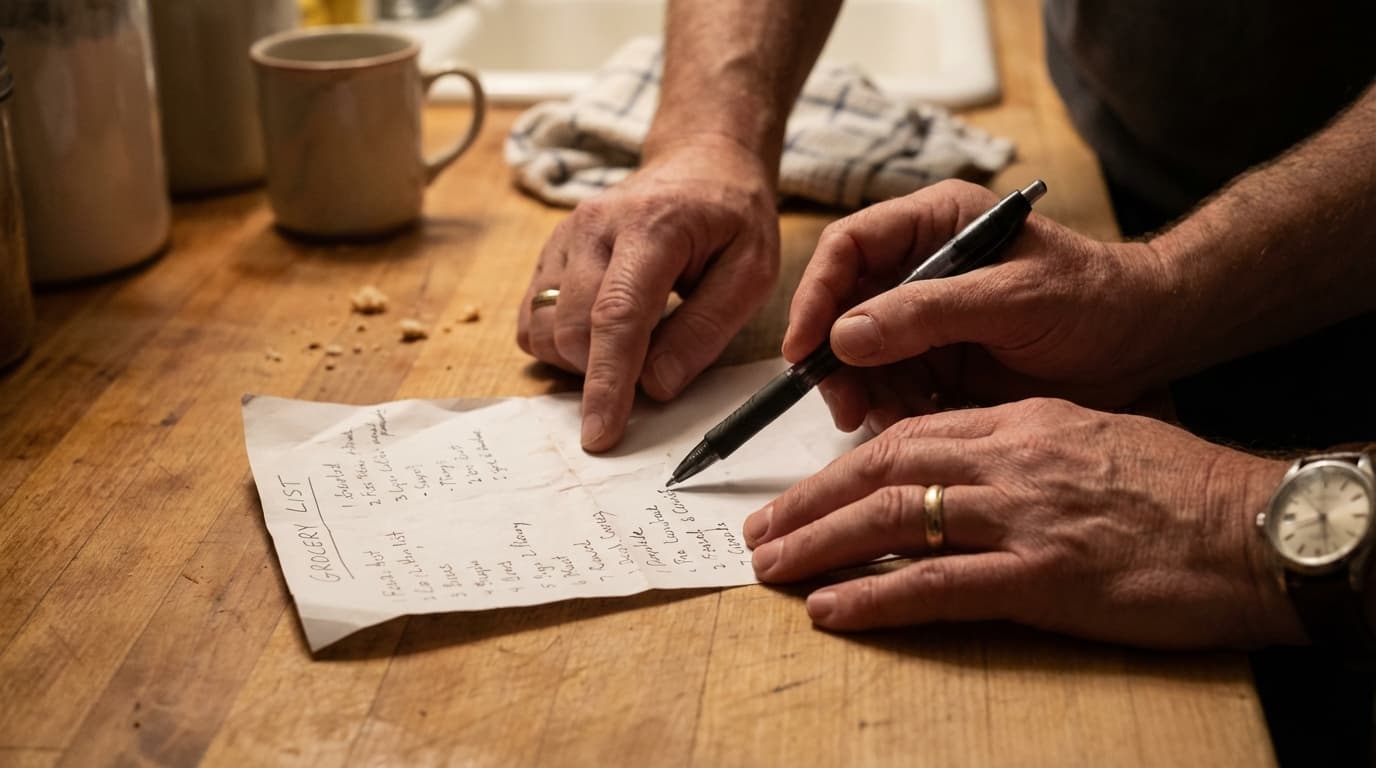
Shared shopping sounds easy until two people buy milk on the same day because neither knew the other was already in the dairy aisle. The failure is not forgetfulness. The failure is information stuck in private channels. Text messages evaporate. Voice notes get ignored. A list that updates in one place fixes a surprising amount of friction without turning dinner into a project management seminar.
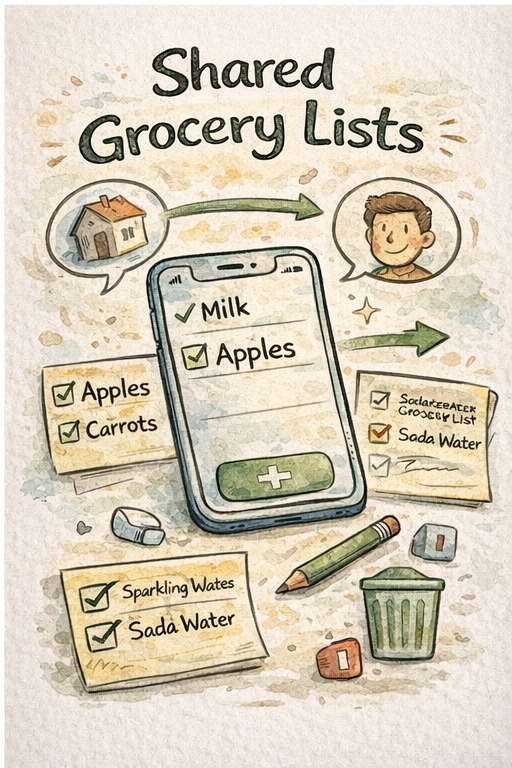
ListiMate is built around shared lists with real-time sync between web and mobile. This article stays on habits and tradeoffs. If you want a concise product summary, shared grocery list app is the right page. If you want the mechanics of offline shopping, offline grocery app for families covers the same product behavior with a different emphasis.
What "shared" should mean in your house
Shared does not have to mean democratic. Some households assign a primary shopper. Others split by category. Roommates might split by week. Couples sometimes split by store. The only rule that matters is that everyone knows which rule you picked. Silent assumptions are how you end up with three jars of the same spice and a fight about who was supposed to check the pantry.
I prefer explicit ownership over politeness. If you are the primary shopper, say so. If you are not, your job might be adding items early in the week, not adding them five minutes before the cart is full. Early additions give the primary shopper time to batch routes through the store.
Real-time sync is a social contract
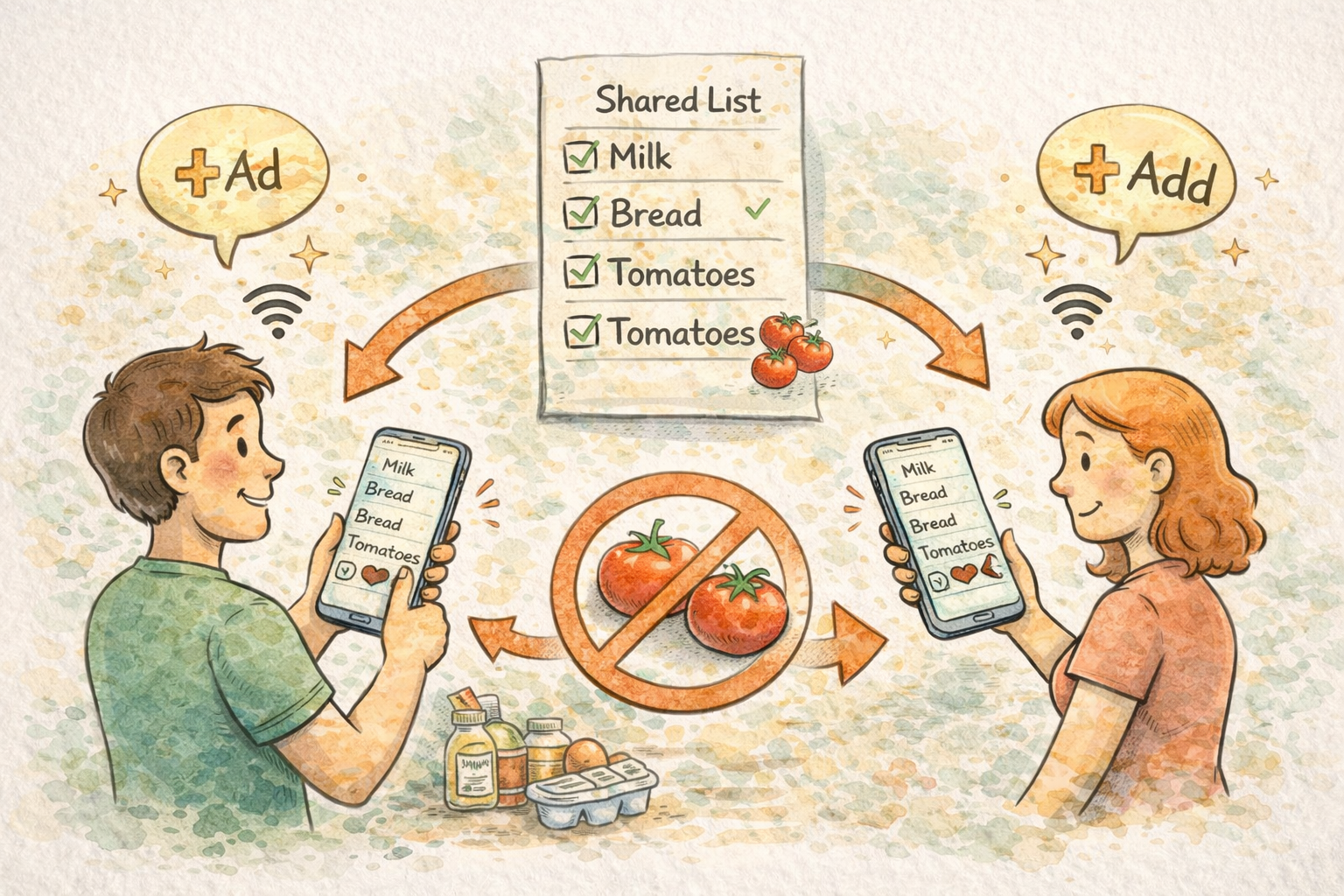
When the list updates while someone is shopping, trust matters. If your household has a joker who deletes items for fun, you need a conversation, not a feature. For everyone else, real-time updates mean fewer "did you get the onions" texts. Texts are not evil, but they scale badly when four adults share a house.
If you are coordinating across generations, keep language on the list plain. Brand names help. Sizes help. "Mom's tea" is ambiguous. "Orange pekoe 100 count" is less so.
Couples and small households
Two people can still generate surprising duplication because both think they are being helpful. A simple pattern is: one person owns the weekly staples, the other owns extras and treats. Another pattern is: one person adds, the other only removes duplicates before checkout. Pick a pattern and run it for a month before declaring failure.
The site has a page aimed at two-person shopping: couple's grocery list. It is not romance advice. It is cart advice.
Roommates and fairness
Roommates often fight about money, not about cilantro. Separate lists for separate budgets can help. If you share one list, agree how you split big ticket items and how you mark "shared" versus "mine." Notes fields exist for a reason. Passive aggression in a note is still readable. Prefer boring clarity.
Large families and volume
More people means more edge cases: allergies, after-school snacks, the teenager who drinks a shocking amount of milk. Volume mistakes scale with headcount. If your household is big, prioritize categories that match your store layout so nobody has to backtrack with a full cart. The marketing site mentions large-family framing on grocery list app for large families.
Invites and trust boundaries
Sharing a list is sharing a small piece of household infrastructure. Treat invite links like house keys. Rotate or revoke when someone moves out. If you are new to shared lists, start with a short list of staples before you import your entire pantry fantasy. A short list teaches habits faster than a long one that nobody maintains.
Notifications: helpful or noisy
Notifications can save a trip or drive you insane. Tune them to your tolerance. Some people want a ping when the list changes during a shop. Some people want silence until they open the app. There is no universal answer. There is only the answer that keeps your household from hiding the app in a folder.
When someone shops without signal
Offline-friendly behavior matters because stores are Faraday cages with fluorescent lighting. If your list is only trustworthy online, you will eventually abandon it mid-aisle. ListiMate aims to keep working and sync later. That matters more for shared lists than solo lists because coordination errors are visible.
Conflict resolution without a meeting
If two people disagree about what to buy, the list is a bad place for a long debate. Move the debate to a short conversation, then write the outcome as a single line everyone can see. "Try the cheaper beans this week" beats twelve messages.
Budget pressure
If money is tight, shared lists help because they make impulse adds visible. That can feel judgmental if your household is not ready for transparency. Frame it as visibility, not surveillance. The budget grocery list page is a useful external reference when you want neutral language about affordable staples.
Weekly rhythm
Shared lists work better when the household has a loose weekly rhythm. Not a perfect rhythm. A loose one. Someone checks the list before the weekend shop. Someone checks it before the midweek top-up. If nobody owns rhythm, the list becomes a graveyard of good intentions.
Link out to weekly grocery list planner if you want a structured starting point for that cadence.
What I would not do
I would not run every household decision through the list. I would not use the list as a passive-aggressive scoreboard. I would not expect the app to fix a partnership problem. I would use the list for groceries and keep therapy for therapy.
When both people shop on the same day
Split routes happen. One person hits the supermarket on the way home; the other stops at the budget chain for bulk. That is fine if the list reflects what is already in the cart. I have watched two well-meaning adults buy the same cereal because both thought they were saving the trip. The fix is not love. The fix is checking the list before you enter the second store, and marking items in a way your partner recognizes.
If your household uses code words, define them. "Stock" means different things to different people. "Coffee" without detail is a fight waiting to happen. Notes are cheap. Use them.
Houseguests and temporary housemates
Guests change grocery math without asking. They drink the milk you planned for breakfast. They finish the snack you earmarked for school lunches. You can handle that with grace or with a hidden stash. Either way, shared lists help when you update quantities mid-week instead of pretending the original plan still fits.
Temporary roommates need explicit end dates on shared access. When someone moves out, rotate invites the same way you would change a Wi-Fi password. It is not about distrust. It is about avoiding ghost edits from old accounts you forgot were still connected.
Glanceable truth in the aisle
The best shared list is glanceable. Long paragraphs in item titles defeat the purpose. If you need a paragraph, put it in notes and keep the title short enough to read while you are moving. Your fellow shoppers are not trying to read a novel next to the yogurt.
Links worth bookmarking alongside this article
If you want diet-specific seeds, bookmark gluten-free grocery list or vegan grocery list. If you want budget language that is not emotionally loaded, use budget grocery list. If you want large-household framing, use grocery list app for large families. These pages overlap in places. That is fine. People search with different words for the same Tuesday problem.
Caregivers and shopping for parents
If you shop for aging parents, shared lists reduce anxiety on both sides. They can add items when they think of them instead of waiting for your weekly call. You can see what matters before you drive across town. The emotional trick is to keep edits kind. A blunt "wrong brand" note lands harder than you intend. Use neutral language and specific replacements.
Pet food and non-food items
Households argue about where pet food belongs on a list. Pick a convention and keep it. Same for cleaning supplies, pharmacy items, and the random hardware that shows up when something breaks mid-week. Non-food lines are still coordination problems. A shared list keeps them visible without a separate app ecosystem nobody will open.
After travel
Coming home from a trip is when lists rot. You need milk, bread, and something fresh, but you also need to restock the things you forgot you finished before you left. I do a fast pass the night we return: scan the fridge, scan the list, add the obvious gaps. If I skip that pass, we limp through three days of odd meals and blame jet lag instead of planning.
Closing
Shared grocery lists work when updates are fast, language is clear, and someone owns the weekly check-in. ListiMate gives you the plumbing. You still supply the norms. Start small, keep language boring, and celebrate the week you did not buy duplicate milk. That week is underrated.
Open the app from thelistimate.com when you want the web view for setup, then keep the phone for the store. Same list, fewer arguments about who forgot the eggs.

Author
Ahmed Mahfouz
Founder of ListiMate. Interested in how families coordinate without meetings.