
Meal planning
Meal planning and recipes in ListiMate: a full workflow
The part nobody posts on Instagram
I have started meal plans on Sunday night with good intentions and watched them dissolve by Wednesday because someone got sick, work ran late, or we just did not want to eat what the plan said. That is normal. A meal planning system that only works when life is calm is not a system. It is a fantasy with a calendar skin.
ListiMate is built around grocery reality: lists that sync, recipes you can reuse, and a path from "we should eat that" to "it is actually on the list." This article is a long, practical walkthrough of how those pieces fit together. I will mention the main site once up front so you know where to open the web app if you are reading on a phone and want a bigger screen for setup.
What you are actually optimizing for
Before you touch a recipe import or drag anything onto a day of the week, answer one question: what is the job of dinner this month? For some households the job is speed. For others it is keeping a food allergy boring and predictable. For some it is using what is already in the fridge before it turns. Your job might be all three on different nights. That is fine. Meal planning only works when it admits that Tuesday and Saturday do not owe each other the same energy.
I write down three anchors when I plan: a night that can be slow, a night that must be fast, and a night where leftovers or "toast and eggs" is the honest plan. Everything else is flex. Flex is not failure. Flex is what keeps you from throwing away wilted spinach because you pretended you would cook fish five times.
Recipes as a personal library
Recipes in the app are not a contest. You do not win by saving the most. You win when the list of things your family will actually eat gets longer than the list of things they tolerate. I treat saved recipes like reference cards. Some are aspirational. Most are repeats with small edits.
If you import from the web, you will sometimes get ingredient lines that read like SEO paragraphs. Fix them when you import, not when you are hungry. Rename items to match the words you use in the store. If you always buy "bell peppers" but the import says "colorful sweet peppers," change it. Consistency is how search works later when you are building a list in a hurry.
When a recipe is stable, connect it to shopping on purpose. The failure mode is a beautiful recipe card and a separate list built from memory. Memory buys duplicate soy sauce.
From recipe lines to cart behavior
Here is a habit that sounds small and saves real money: when you move ingredients toward a list, mark what you already have at home before you shop. Pantry amnesia is universal. I have bought cumin while a nearly full jar sat behind the pasta because I did not check. The app cannot see inside your cabinets. You have to tell it "already stocked" in whatever form that takes for you, notes included.
For diet-specific shopping, the marketing site has entry pages that pair well with a recipe library. If plant-forward weeks are the goal, start from vegetarian grocery list. If you need celiac-safe defaults in your head while you shop, gluten-free grocery list is written in that spirit. Those pages are not medical advice. They are shopping lenses.
Meal planning as a bridge, not a trophy
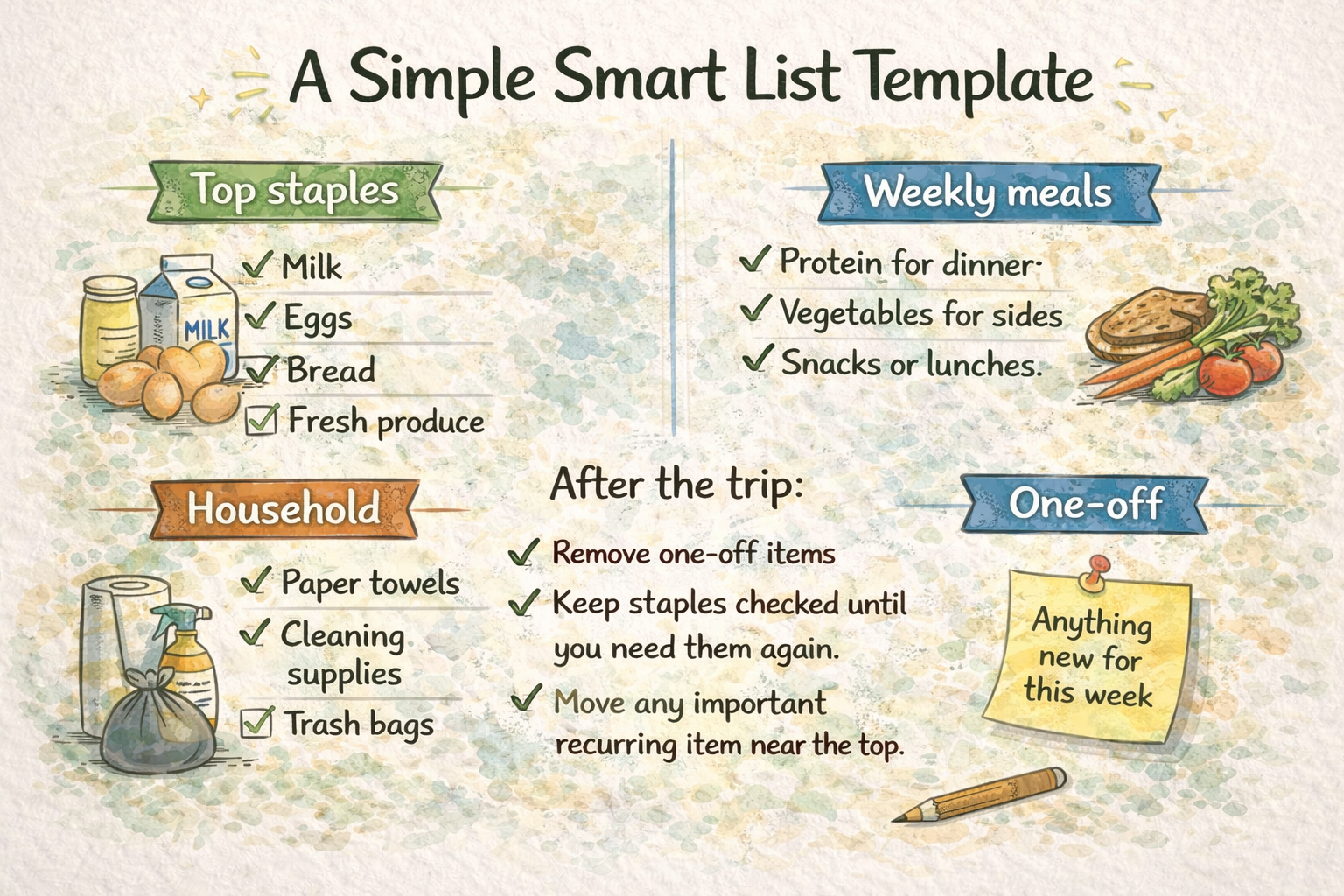
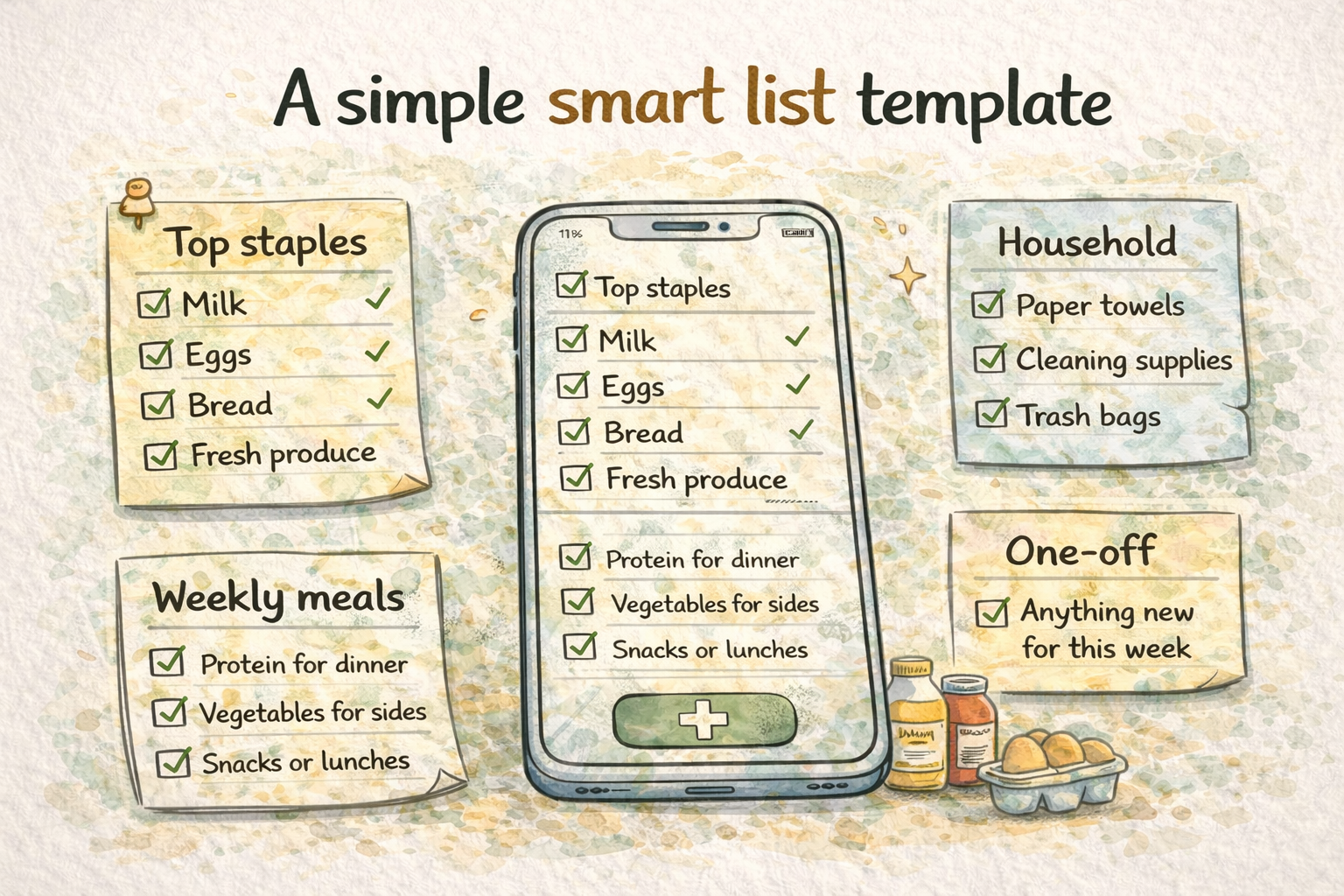
The meal planning surface is useful when it changes what goes on the list. A plan that lives only in your head is theater. A plan that produces ingredients on a shared list is logistics.
Attach meals to days loosely. If you know Thursday is chaotic, plan a meal that can be late or swapped with leftovers without guilt. If you know Sunday has time, put the recipe that needs chopping there. I stopped pretending every night deserved equal ambition. Uneven ambition matches real kitchens.
Weekly versus monthly thinking
Some ingredients belong to a weekly rhythm: greens, milk, bread. Some belong to a monthly or occasional rhythm: big bags of rice, oil refills, the spice you only replace twice a year. When those rhythms collide in one trip, split your mental model so you do not optimize for only one of them.
The site has a page aimed at weekly coverage: weekly grocery list planner. If you buy in bigger waves, monthly grocery list for bulk shoppers speaks to that cadence. I link both because people find this article from different search intents. Pick the cadence that matches your rent week and your freezer space, not the cadence that looks best in a headline.
Budget weeks without shame
When money is tight, simplify the recipe set on purpose. Fewer ingredients means fewer chances to impulse-buy in the snack aisle because you were tired of making decisions. The budget grocery list page is aimed at students and anyone trying to keep a tight receipt without giving up produce entirely.
I have done "bean weeks" and "egg weeks" without turning it into a personality. The list still matters. Cheap food still needs a list or you buy extras that are not cheap anymore.
Sharing the plan with people who live with you
Meal planning is social even when you do not want it to be. Someone will add snacks. Someone will remove duplicate milk. Someone will ask for a different vegetable because the one you planned feels like a personal attack to a six-year-old. Shared lists make those edits visible without a forty-message thread.
For product-level language about sharing, shared grocery list app states what ListiMate aims to do in plain terms. I am not going to repeat every bullet here. The habit side is: one list, visible edits, fewer silent duplicates.
Offline stores and parking garages
Supermarkets have bad reception. Basements too. If your list disappears when the signal drops, you stop trusting it. ListiMate is meant to stay usable offline and sync when the network returns. If you want the family-framing of that behavior, read offline grocery app for families.
Imports: what usually goes wrong
Recipe import is fast. Cleanup is still yours. Watch for duplicated lines, missing quantities, and ingredients hidden inside instructions. If something looks like a paragraph, split it. If two lines say the same spice, merge them. Future you is standing in aisle four, not at a keyboard.
Rotations beat constant invention
Novelty is expensive. If you need variety, rotate proteins or cuisines on a predictable pattern instead of inventing seven new dinners every week. Taco Tuesday is a meme because it works. Soup on Wednesday can be a meme too if your household likes soup.
When the week breaks
Sick kid, late train, friend drops by, you forgot the beans. The plan should bend without you abandoning the tool. Delete a meal, move ingredients to next week mentally, or mark items as deferred. The worst outcome is a perfect plan and an empty fridge because you were too proud to adjust.
A set of questions I ask before I shop
What nights are actually home? What produce will rot if we ignore it? What is in the freezer that wants to be eaten? Is there one meal everyone is tired of? What is the fastest honest dinner we can make with what is already here?
Scenes from ordinary weeks
Last month my plan said stir-fry on Tuesday. Tuesday arrived with a dead car battery and a meeting that ran long. I did not cook stir-fry. I made eggs and toast and moved the vegetables to Wednesday without turning it into a moral story. The list helped because the vegetables were still sitting there as a visible promise, not a vague intention in my head.
Another week, I overbought herbs because spring looked cheerful and I felt optimistic. Optimism is expensive in the produce section. I now write a small note on fragile items: "use by Thursday" or "buy small bunch." The app cannot smell basil for you. It can remind you that you bought basil for a reason.
If you cook for kids, you already know that plans are suggestions. I keep two or three "escape hatch" meals that take under twenty minutes and do not require a clean kitchen. Those meals have their own tiny ingredient footprint. They are not glamorous. They prevent the drive-through run that costs more than money.
Paleo, low-FODMAP, and other guardrails
I am not going to tell you how to eat. I will tell you how I use diet pages when my household tightens rules for a season. The marketing site includes paleo grocery list and low-FODMAP grocery list. I treat those pages as vocabulary lists for the store, not as medical programs. If your clinician gave you constraints, those constraints beat any blog paragraph.
When guardrails tighten, I simplify recipes on purpose. Complicated meals produce long ingredient lines, and long ingredient lines produce mistakes. A shorter list is easier to share, easier to audit, and easier to hand to someone else if they shop for you.
The second trip problem
The second trip is not always about forgetting. Sometimes it is about ambition. You planned a big cook, then life shrank your available time. The ingredients sit. Guilt sits next to them. I have started marking "optional" on ingredients that are nice-to-have so I can skip a return trip without feeling like I failed the recipe. That sounds like a tiny hack. It saved me hours.
Reading order on the marketing site
If you came here from search, you might also want these pages in a sensible order. Start with weekly grocery list planner if your problem is cadence. Start with shared grocery list app if your problem is coordination. Start with offline grocery app for families if your problem is signal in the basement store. The product is one app; the stories are different on purpose.
Closing
Meal planning with ListiMate works when recipes, days, and lists talk to each other. The app holds structure. You still make the tradeoffs only a human can make: compassion for a tired partner, patience with a picky eater, the courage to buy the cheap cabbage.
If you are new, open thelistimate.com, build one small recipe, and push one real shop through the list. Scale up only after that first loop feels boring. Boring is the goal. Boring means it survived a Tuesday.

Author
Ahmed Mahfouz
Founder of ListiMate. Writes about grocery habits that survive real life.